
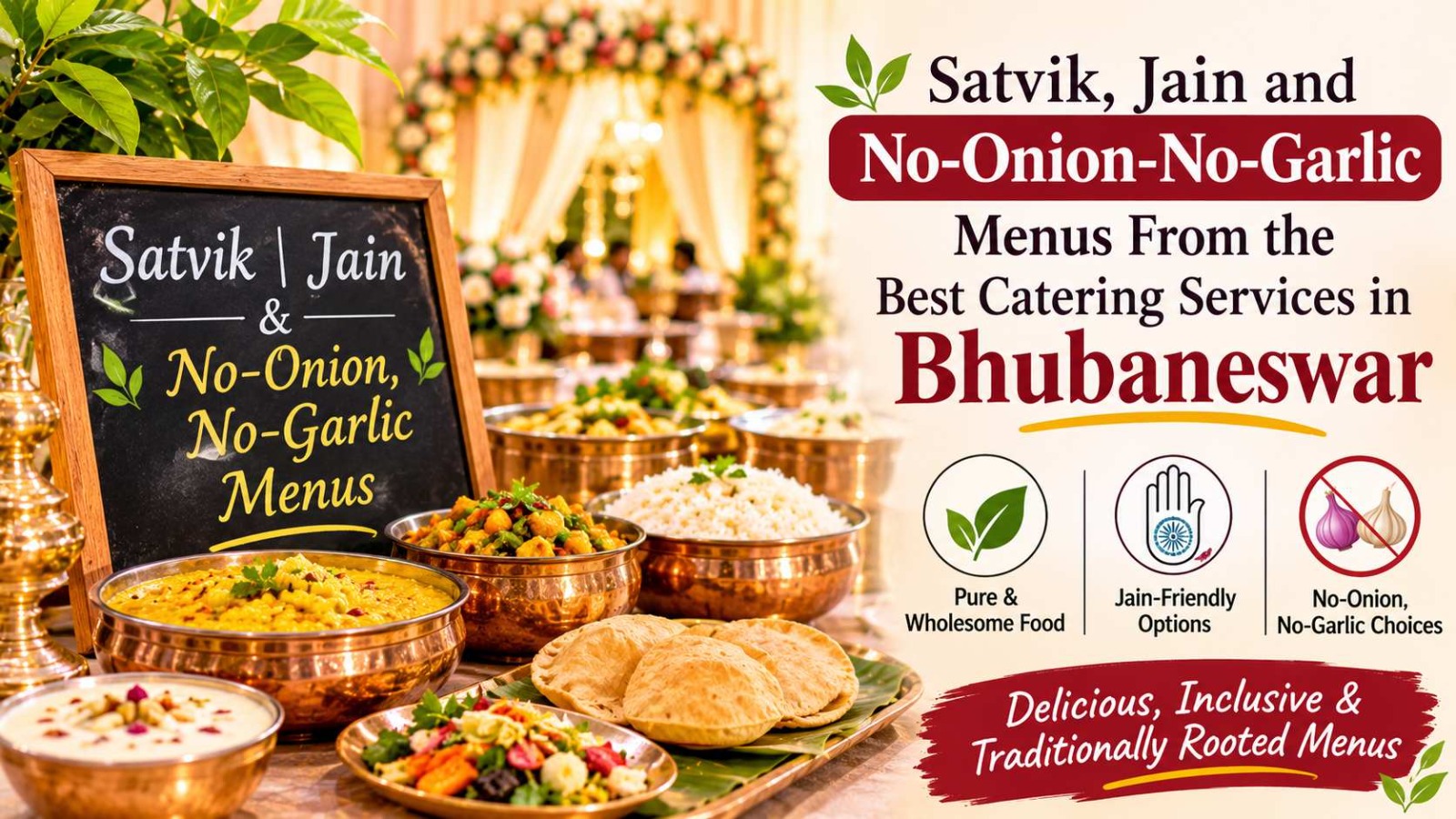
Satvik, Jain and No-Onion-No-Garlic Menus From the Best Catering Services in Bhubaneswar
Satvik, Jain and no-onion-no-garlic menus avoid specific ingredients, so the kitchen must use separate utensils, trusted ingredients and clear labelling. Ask your caterer how they prevent cross-contact and which dishes they cook regularly in this style.
In many homes in Odisha, certain meals must follow strict rules. A puja, a thread ceremony, an Ekadashi gathering, a Jain family function or a temple-related feast may all call for food without onion and garlic, and sometimes without root vegetables. Cooking such a menu at scale is not simply a matter of leaving two ingredients out. It needs planning, discipline and respect. This guide explains what to look for among the best catering services in Bhubaneswar when your event follows these traditions.
What the three styles actually mean
The words are used loosely, so it helps to define them. A no-onion-no-garlic menu leaves out those two ingredients but may include other vegetables. A satvik menu goes further, usually avoiding onion, garlic, stimulants and heavily spiced or fried dishes, and favouring fresh, simple, seasonal food. A Jain menu typically excludes root vegetables such as potato, carrot and radish, along with onion and garlic, and follows stricter rules about timing and preparation.
Because each family interprets these practices a little differently, never assume. Tell your caterer exactly which rules apply.
The kitchen is as important as the recipe
The biggest risk is cross-contact. If the same pan, ladle or oil is used for a regular dish and a satvik one, the rule is broken even though the recipe is clean. Ask whether the caterer can set up a separate cooking area, separate vessels and separate staff for the special menu.
Ask also about ingredients. Packaged masalas, sauces and some asafoetida blends may contain onion or garlic powder. A careful caterer reads labels or makes spice mixes in-house.
Flavour without onion and garlic
Many people fear this food will taste flat. It does not need to. Traditional Odia cooking has long relied on other sources of depth. Panch phoron, roasted cumin, ginger, green chilli, curry leaves, mustard, coconut, tomatoes and carefully browned ghee create layered taste. Dishes such as dalma, a plain mix of vegetables with lentils, khichdi, pitha and simple kheer show how satisfying this style can be.
For temple-style or festival meals, remember that long-standing recipes already follow these rules. A caterer who understands them can reproduce that taste instead of improvising.
Choosing dishes that work at scale
Some dishes are easier to prepare in volume without compromise. Dal, rice, mixed vegetable curries, simple fried items, pulao made with whole spices and a range of sweets all work well. Rich gravies that traditionally lean on onion paste need more creativity, so ask for a tasting before committing.
Avoid trying to imitate every restaurant dish. A shorter menu cooked well will always beat a long one that cuts corners.
Serve with care and clarity
On the day, mark counters clearly. Use signs, such as separate colours or labels, to tell guests which area is satvik and which is regular. Train servers to explain, politely, when asked. Where possible, serve the special menu first or at a dedicated station so that nobody is rushed or mixed up.
If the entire function is satvik, much of this is easier. If it is a mixed event with some guests following restrictions, a distinct, well-run corner prevents embarrassment.
Timing and ritual considerations
Many ritual meals have rules about when food may be cooked, who may cook it and how it is first offered. Share these early. Some families want the kitchen blessed before cooking begins, or want a family member to supervise. A respectful caterer will accommodate these requests without fuss.
Questions to ask your caterer
Ask how often they cook satvik or Jain menus. Ask which ingredients they avoid and whether they use pre-mixed spices. Ask how cross-contact is prevented. Ask to see a sample menu and to taste it. Ask who will supervise on the day. If you are shortlisting the best catering services in Bhubaneswar, these answers separate those who truly understand tradition from those who simply say yes.
What families often forget
Water, desserts and snacks matter too. A sweet that uses gelatin or a snack fried in the same oil as non-vegetarian items undermines the whole effort. Also consider food for guests with allergies or diabetes within the same menu, so that the meal is inclusive.
How Sumangalam Caterers approaches ritual-day food
Sumangalam Caterers has served ritual-day menus for Odia and South Indian families for years, including thread ceremony meals where strict food rules apply. The team prepares such dishes with separate utensils and clear supervision, and is comfortable with detailed instructions from priests or elders. That experience is one of the quiet strengths of the best catering services in Bhubaneswar.
A sample satvik thali
To picture the result, imagine a plain rice or pulao, a yellow dal tempered with cumin and ginger, a mixed vegetable dalma, a banana-flower or pumpkin curry, a light fried item such as vada made without onion, a fresh salad, curd and a kheer or pitha to finish. It is colourful, filling and gentle on the stomach, and most guests leave happily without noticing what is missing.
Frequently asked questions
Is no-onion-no-garlic food the same as satvik food?
Not exactly. Satvik food usually avoids more ingredients and favours simple, fresh preparation.
Can a regular kitchen cook a Jain menu?
Only with separate utensils, careful ingredient checks and clear supervision.
Will the food taste bland?
No. Spices, herbs, ghee and slow cooking create plenty of flavour.
For a tasting of a satvik or ritual-day menu, call Sumangalam Caterers on +91 8984771790.
